


Avatar World ®
Pazu Games
Avatar World is the kind of role-playing game I open when I want something creative, relaxed, and easy to understand without a long tutorial. I can build a little routine for a character, move between familiar places, change the look of the world, and make up my own story instead of following a strict mission list. That freedom is the main attraction, but it also explains the game’s biggest weakness: players who need clear goals, difficult battles, or a strong sense of progression may quickly feel that there is not enough structure.
Developed by Pazu Games, this free game is aimed at Everyone and works on devices running Android 6.0 or later. It has become a remarkably popular choice, with an average rating of 4.8 from around 5.2 million ratings and more than 100 million installs. Those figures make sense once I understand what it is trying to be. This is not a conventional role-playing adventure with statistics, combat, and a final boss. It is closer to a digital playroom where I direct characters, arrange scenes, and turn ordinary activities into small stories.
How I use Avatar World in a normal play session
My baseline workflow is simple. I begin by choosing a character and checking the available locations rather than trying to discover everything at once. I then decide what the scene is about: getting ready for school, preparing food, spending time with friends, visiting a shop, or creating a completely imaginary situation. Once I have that small idea, the objects and rooms become more useful because I am interacting with them for a reason instead of tapping randomly.
Related News

Block Blast!: The Puzzle Game Reflecting Our Digital Lives

How the Latest Google Maps Update Enhances Your Navigation Experience

Unleashing Creativity in Avatar World ®: The Art of Customization
The game works best when I treat each location like a stage. I move characters into position, pick up items, change clothing or accessories when appropriate, and let the scene develop through my own choices. There is no need to rush from one activity to another. A child can play out a short event in a few minutes, while an older player can spend much longer arranging a detailed scenario.
That open format is particularly good for children who enjoy pretend play. Instead of asking them to win, collect, or defeat something, it gives them room to decide what should happen. I have found that the lack of a required objective can be a strength during quiet play, especially when the player wants control over the pace.
Related News

Why WhatsApp Messenger Still Makes Everyday Communication Feel Easy

Jurassic World: The Game Is the Better Dino Tycoon for Strategic Players

Threads in Real Life: Who Should Join, Lurk, or Leave

How SHEIN Turned Shopping Into an Endless Content Feed

How to Make Fortnite Feel Smarter on Mobile

Should You Switch to Microsoft Outlook on Mobile?
It is also useful for quick, repeatable sessions. If I only have a short break, I can return to a familiar room and change one part of the story without relearning a complicated system. A morning routine, a pretend shopping trip, or a family dinner can all become a complete session. The game does not demand that I remember a large map or a chain of missions before I can enjoy it.
Why the open-ended design works for families
The most important habit is to give the player a small prompt. “Create a party,” “prepare for a rainy day,” or “make a character help in the kitchen” is more useful than simply saying “play the game.” A prompt turns the broad collection of places and objects into a manageable creative task. It also helps a parent understand what the child is doing without taking over the session.
I would not describe the experience as a traditional role-playing campaign. There is no emphasis on improving a character through combat or building a powerful team. Instead, the role-playing comes from choosing who a character is and how that character behaves. For some players, that is exactly the appeal. For others, it will feel more like a life-simulation playset than an adventure game.
Gallery
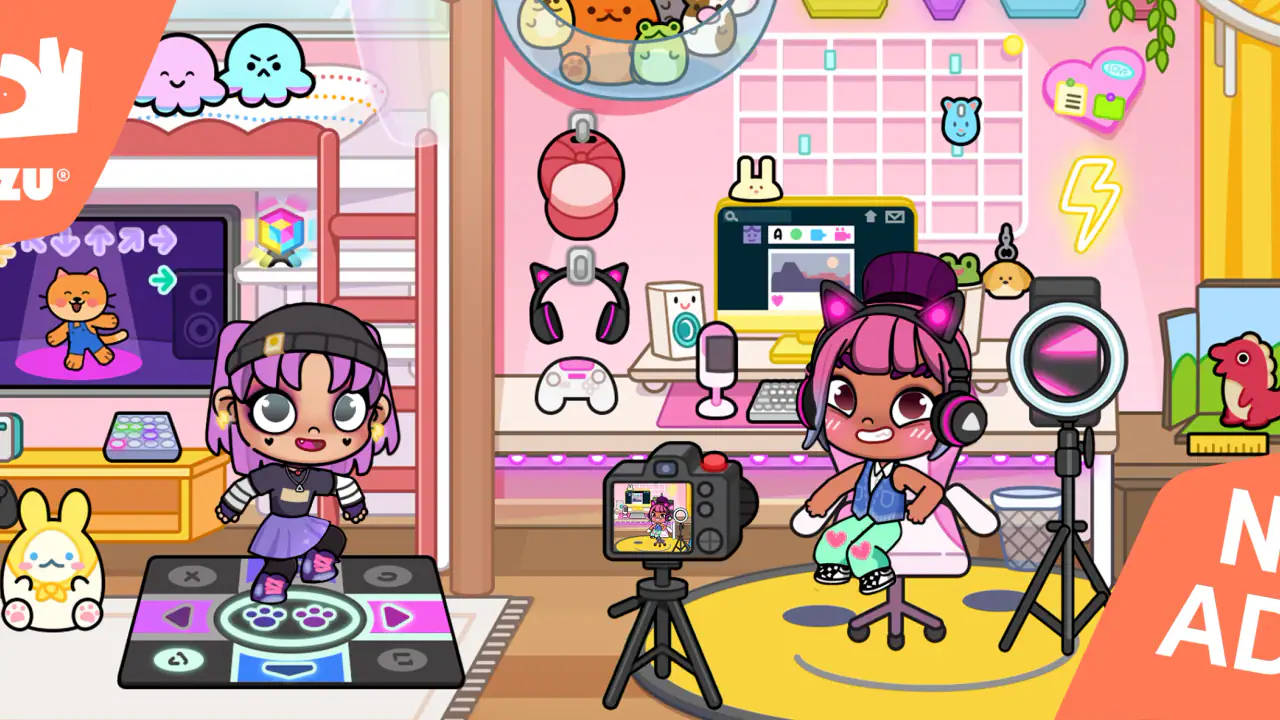
The age rating of Everyone makes the game approachable for a broad audience, but adults should still guide younger players around purchases. The game itself is free, while optional in-app items range from $0.99 to $59.99 each. I consider that an important practical detail for a family device. Before handing over the phone or tablet, I would review the store’s purchase controls and agree on whether optional content is allowed.
Settings and preparation that make a difference
There is no need to spend a long time adjusting the game before playing, but a few preparation habits improve the experience. I first make sure the device has enough room for the game and that the operating system meets the Android 6.0 minimum. On a shared device, I also check who is using the account and whether purchase approval is active. Those steps are not exciting, but they prevent a creative session from turning into a billing or access problem.
I also recommend deciding whether the session is for free exploration or for a specific story. Mixing both is possible, but a clear intention helps. When I want a calm activity, I choose one location and build a scene there. When I want variety, I plan a short sequence that moves from one place to another. This prevents the common problem of opening the game, looking at everything available, and losing interest before anything happens.
For younger players, I would begin with a small number of characters and objects. A crowded scene can become difficult to manage, especially when several items are being moved at once. Starting with two characters and a simple setting makes it easier to understand cause and effect. Later, adding more characters feels like an expansion of the story rather than visual clutter.
On a tablet, the larger screen can make arranging scenes more comfortable, particularly when several characters are visible. On a phone, I prefer shorter stories with fewer objects because the smaller display makes precise placement less convenient. The game remains approachable on either type of device, but the ideal session length and scene size can change with the screen.
Faster patterns for repeat players
Experienced use is less about discovering a secret button and more about building a repeatable routine. I keep a mental list of a few reliable story starters: a daily schedule, a celebration, a problem to solve, and a visit to another location. When I return to the game, I can choose one immediately instead of spending the first several minutes deciding what to do.
Another useful pattern is to prepare the scene before moving the characters into it. I place the main objects first, then bring in the characters and assign each one a purpose. This is faster than repeatedly moving characters aside while I arrange furniture or props. It also produces cleaner scenes, which matters if I am showing the result to a child, sibling, or friend.
I find it helpful to change only one major element at a time. For example, I might keep the same location but alter the characters’ clothing, or keep the characters but create a different activity. This makes the game feel more like an ongoing world. It also lets me see which changes actually make a scene more interesting instead of replacing everything and forgetting what worked.
A practical trick for parents is to use the game as a conversation starter. After a child creates a scene, I can ask why a character is there, what happens next, or how the problem could be solved. The game does not need to provide a lesson or a formal objective to support imaginative discussion. Its value often comes from what the player adds verbally.
For solo players who enjoy decorating or storytelling, I suggest making a small “episode” with a beginning, middle, and ending. The beginning introduces the situation, the middle adds a complication, and the ending resolves it. This simple structure gives direction without forcing the game into a mission-based format. It is one of the best ways to get more depth from an otherwise very open experience.
Where the freedom starts to feel limited
The same openness that makes the game welcoming can make it feel shallow to players who expect progression. If I want character abilities, meaningful rewards, tactical decisions, or increasingly difficult challenges, this is not the right kind of role-playing game. The creative freedom is the content, so the player has to supply much of the motivation.
There can also be friction when I want a precise result. Moving several objects or characters into an exact arrangement is not always as quick as imagining the scene in my head. A younger player may need help understanding how to place something or recover from an accidental move. The experience is forgiving overall, but it is not the same as drawing a picture where every mark goes exactly where intended.
The free entry point is generous for trying the game, yet optional purchases can affect how complete the experience feels to a particular player. Someone who wants access to every available item may find the potential cost difficult to justify, especially when the main activity is arranging scenes rather than progressing through a campaign. I would treat purchases as extras, not as something necessary to understand the core idea.
There is also a difference between replayability and progression. I can return many times because I can invent new situations, but the game does not necessarily give me a new mechanical challenge each time. That makes it excellent for imaginative play and less satisfying for players who measure value by unlocking stronger abilities or reaching new stages.
Compared with a conventional role-playing game, this one removes combat, complex menus, and pressure to optimize a character. Compared with a structured life simulator, it gives me more control over the story but may provide less guidance about what to do next. Compared with a building or sandbox game, its appeal is concentrated on characters, places, and everyday role-play rather than on technical construction. Choosing between them depends on whether I want authored objectives, systems to master, or a flexible world for pretend play.
Who should try it and who should choose something else
I would recommend Avatar World to children who like dressing characters, arranging rooms, and inventing conversations. It is also a good fit for parents looking for a calm shared activity that can be explained in ordinary language. Creative adults may enjoy it as a lightweight storytelling tool, particularly when they prefer setting up scenes to completing difficult challenges.
I would be more cautious about recommending it to a player who becomes bored without explicit goals. If winning, collecting, fighting, or improving numerical abilities is the reason someone plays role-playing games, another title with missions and progression will probably be a better match. The same applies to players who dislike optional purchase systems or who want all content to be available through one straightforward payment.
The current version is 1.187, and the game is free to start, which makes trying it relatively easy. Still, I would evaluate it by the quality of the player’s invented activities rather than by the number of locations visited in one sitting. A child who enjoys making up stories may return to the same place repeatedly and get more from it than a child who expects the game to constantly introduce new objectives.
My verdict after settling into its rhythm
Avatar World succeeds because it understands that not every game needs to tell the player what to do. Its best moments come from small, self-directed scenes: a character getting ready, a group meeting, an ordinary errand becoming a funny story, or a carefully arranged room that supports an imaginary adventure. I appreciate how quickly I can start playing and how little pressure there is to perform.
My strongest recommendation is to use it with a repeatable creative routine. Choose a simple prompt, prepare the location, arrange a few objects, and give each character a role. That approach exposes the game’s real strength much faster than random tapping. It also makes the experience easier to share with a child or use during a short break.
My final judgment is positive, with a clear condition: this is a creative role-playing playroom, not a progression-heavy adventure. If that distinction matches what you want, the free download and approachable design make it easy to explore. If you need deep systems, difficult choices, or a clear ending, I would look elsewhere. For imaginative everyday storytelling, though, Pazu Games has created a flexible space that earns its place on a family device.
FAQs for Avatar World ®
What is Avatar World ® and what makes it unique?
Avatar World ® is a creative simulation game that allows users to design and personalize their own avatars in a vibrant, interactive environment. The app stands out due to its extensive customization options and immersive world-building features, offering players a unique opportunity to express their creativity and connect with others.
Can I play Avatar World ® on both Android and iOS devices?
Yes, Avatar World ® is available for download on both Android and iOS platforms. The app is optimized for performance on a wide range of devices, ensuring a smooth and engaging experience whether you're using a smartphone or tablet.
Is Avatar World ® free to download and play?
Avatar World ® is free to download, offering a variety of features at no cost. However, it also includes optional in-app purchases that enhance gameplay, such as exclusive avatar items and premium customization options. These purchases are entirely optional and not necessary to enjoy the game.
What age group is Avatar World ® suitable for?
Avatar World ® is designed for a broad audience, catering to both younger users and adults who enjoy creative and social gaming experiences. It features a user-friendly interface and appropriate content, making it suitable for players aged 12 and up, with parental guidance recommended for younger users.
How does Avatar World ® handle user privacy and data security?
User privacy and data security are top priorities for Avatar World ®. The app adheres to strict privacy policies and uses advanced encryption methods to protect personal information. Users can manage their privacy settings within the app, ensuring they have control over their data and interactions.
Pros
- Highly immersive graphics and sound.
- Wide variety of customizable avatars.
- Regular updates with new features.
- User-friendly interface and controls.
- Engaging storyline with multiple outcomes.
Cons
- Requires a stable internet connection.
- In-app purchases can be expensive.
- Occasional performance lags.
- Limited offline functionality.
- High battery consumption on older devices.


